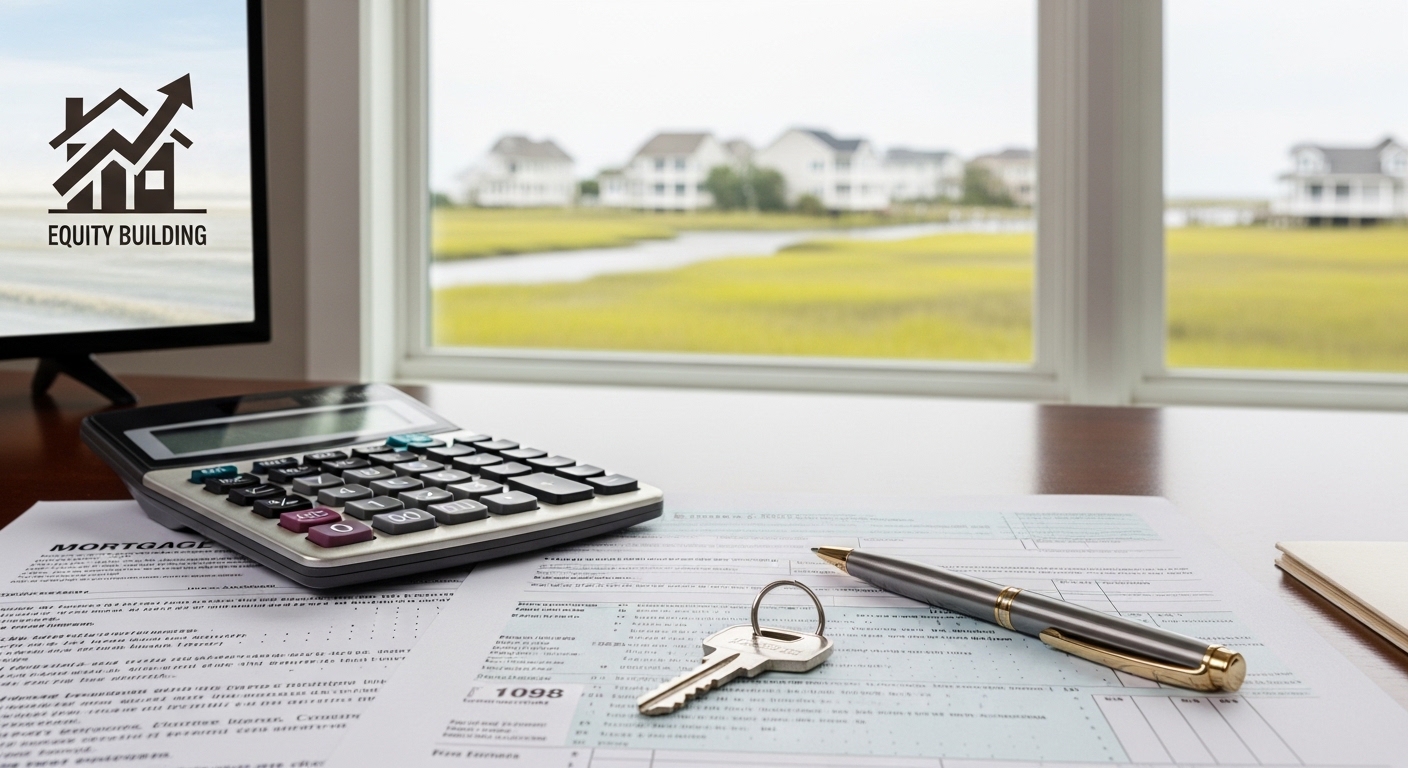
Breaking Down Your Monthly Mortgage Payment
Buying a home can feel overwhelming. Much like starting a new fitness regimen, there's a lot to understand before you take that first step. You need to know what you're getting into, prepare yourself mentally and financially, and have a solid plan to keep going strong. Just as a successful workout requires understanding how all the moving pieces work together, understanding your mortgage payment is crucial to making a confident homebuying decision.
When you look at your monthly mortgage payment, you might see one number and think that's all you're paying. But that number is actually composed of several different components working together. Getting familiar with each piece will help you feel much more in control of your financial health as a new homeowner.
The Main Components: PITI
Your monthly mortgage payment is made up of four primary elements, often abbreviated as PITI. Understanding PITI is like understanding the basic movements in a fitness routine: each part serves a specific purpose, and they all work together to create your complete payment.
Principal and Interest are the muscle of your payment. Principal is the amount you borrow from a lender to pay for a home, and interest is the cost to borrow that money, typically calculated as a percentage of the principal amount. In the early years of your mortgage, a larger portion of your payment goes toward interest, but over time, more of each payment chips away at your principal. It's the long game that builds your equity.
Even a minor fluctuation in your interest rate can result in tens of thousands of dollars in interest savings or costs over the life of the loan. This is why getting the best possible rate matters, and why it's worth having conversations with lenders before you commit.
Property Taxes are another substantial piece. These are yearly taxes determined by local government as a percentage of your home's value and are often used to fund local schools and hospitals. In North Carolina, property taxes vary by county, and Dare County, where Nags Head is located, has its own tax rate. Your property taxes will be collected each month through your escrow account and paid to the county on your behalf.
Homeowners Insurance protects your investment. Homeowners insurance covers certain types of damage to your home, with rates determined by factors including home size, age, location, and your deductible amount. Coastal North Carolina presents unique insurance considerations, especially for homes in Nags Head. Being near the ocean means you'll want to ensure adequate coverage for potential wind and water damage. The average cost of home insurance is $2,490 a year in 2026, but prices vary depending on the location, property and coverage.
The Variables That Shape Your Payment
Now that you understand PITI, let's talk about the factors that actually control how large your payment will be each month. These are the weights you choose at the gym—they directly determine how challenging your workout will be.
Your home price and down payment determine your total loan principal, and a larger down payment not only lowers your monthly obligation but can also help you avoid the cost of private mortgage insurance (PMI), which is required for most loans if your down payment is less than 20%. The difference between putting down 10 percent and 20 percent on a Nags Head home can mean hundreds of dollars per month in savings.
Loan term typically 15 or 30 years dictates your repayment pace, with a shorter term meaning higher monthly payments but significantly less interest paid overall. A 30-year mortgage is more common among buyers because it keeps monthly payments manageable, even though you'll pay considerably more in interest over time.
PMI generally costs an average of 0.46% to 1.50% of your loan amount annually. If you're unable to put down 20 percent initially, that's okay—many first-time buyers don't. Just remember that PMI is an additional cost you'll want to eliminate as soon as your equity position allows.
Don't Forget the Upfront Costs
Before you even make your first monthly payment, there are closing costs to consider. This is where many buyers stumble—they plan for their down payment but forget about the finish line before the race even starts.
Average closing costs typically range from 2% to 5% of the home's purchase price, so on a $300,000 home, you can expect closing costs to be between $6,000 and $15,000. These costs include appraisals, title insurance, recording fees, and other services necessary to finalize your purchase.
Beyond basic closing costs, you'll also need to account for prepaid expenses. Prepaid mortgage expenses typically include your annual homeowners insurance premium, property taxes for the coming year and mortgage interest that accrued during the closing process. Plan to have cash on hand not just for your down payment and closing costs, but for these prepaid items as well.
The Bigger Picture: Ongoing Homeownership Costs
Your monthly mortgage payment is just one part of the financial commitment of homeownership. Remember our fitness analogy? A good workout routine doesn't end after one gym session—it's something you maintain consistently.
In addition to their mortgage, the average homeowner pays $23,686 per year in extra costs including utilities, maintenance, renovations, property taxes, and homeowners insurance, which is nearly $1,974 per month. These aren't mortgage-related fees, but they're costs you'll face every single year as a homeowner.
For Nags Head specifically, this might include higher utilities during the peak summer season when coastal air conditioning usage spikes. You should also budget for potential maintenance related to the salt air environment and coastal weather conditions.
Understanding Your Affordability
Before you start house hunting in Nags Head, understand your budget. The 28/36 rule dictates you spend no more than 28% of your gross income on housing costs. For example, if someone makes $60,000 a year with a gross monthly income of $5,000, they'd spend no more than $1,400 on a mortgage payment each month including homeowners and mortgage insurance premiums.
While meeting the 28/36 rule isn't always doable or desirable, especially if your budget can't comfortably accommodate that payment, many prospective homeowners are tempted to stretch when buying a home. The key is being honest with yourself about what you can afford long-term, not just what a lender will approve.
Getting Your Numbers Ready
As a real estate agent here in Nags Head, I help clients navigate this financial planning every single day. What I've learned is that the families who feel most confident about their purchases are the ones who took time to understand their numbers before they started looking.
I recommend working with a mortgage lender to get preapproved before you start your home search. A preapproval is a written, preliminary commitment from a lender to loan you a certain amount of money at a certain rate, and a preapproval letter is crucial when you're shopping for a home because it shows sellers you're likely able to finance the purchase.
While you're preparing financially, consider using a mortgage calculator to run different scenarios. HOUSEJET offers tools that let you explore how different home prices, down payments, and interest rates affect your monthly payment. Playing with these numbers helps you understand exactly what you're comfortable with before you fall in love with a home that stretches your budget.
Your Nags Head Home Buying Journey
Just like a fitness journey requires planning, preparation, and patience, buying a home in Nags Head requires the same thoughtful approach. You wouldn't start a new workout routine without understanding what you're getting into—and you shouldn't start a home search without understanding your payment.
When you're ready to take that step into homeownership, I'm here to guide you through the process. As your local real estate agent, I can help you find properties that fit your budget and connect you with mortgage professionals who can walk you through every detail of your payment and closing costs.
The financial aspects of homeownership don't have to be intimidating. Break them down into their components, understand how they work together, and you'll be well prepared to make one of the biggest financial decisions of your life with confidence.
Ready to explore what homeownership in Nags Head could look like for you? Let's talk about your goals and create a plan that works for your unique situation.